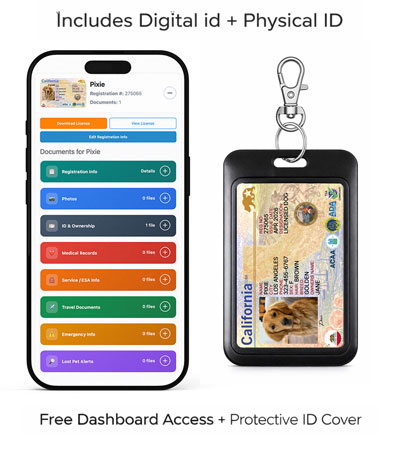
Philadelphia,Pennsylvania Dog Registration Information
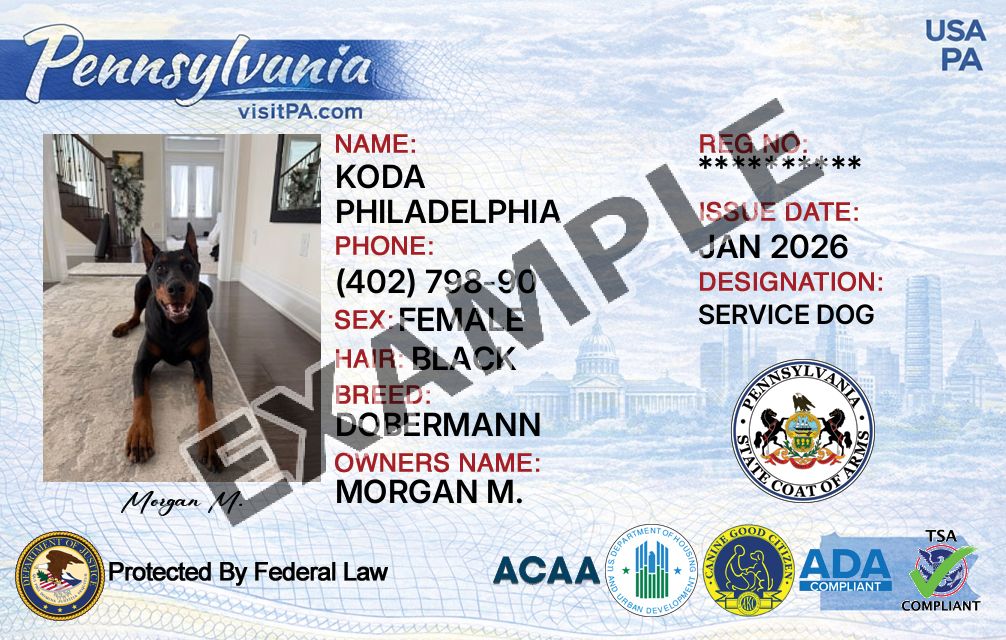
State Licensed, Service Dogs and Emotional Support Dogs in Pennsylvania
Registering a Dog in Philadelphia, Pennsylvania (Service Dog or Emotional Support Dog)
If you’re searching where do i register my dog in Philadelphia, Pennsylvania for my service dog or emotional support dog, the key thing to know is that Philadelphia treats “registration” as dog licensing. A dog license in Philadelphia, Pennsylvania is a local requirement tied to rabies vaccination and animal control enforcement, and it applies whether your dog is a pet, a service dog, or an emotional support animal (ESA). The dog license is separate from a dog’s service animal status under disability laws and separate from an ESA letter used for certain housing situations.
Important: “Dog License” vs. “Service Dog” vs. “Emotional Support Animal”
- Dog license: A local licensing requirement for dogs kept in Philadelphia (often connected to rabies vaccination and identification).
- Service dog: A dog individually trained to do work or perform tasks for a person with a disability (a legal status under disability law, not a city “registration”).
- Emotional support animal (ESA): Generally provides comfort by presence; ESAs are not service animals for public-access purposes.
Where to Register or License Your Dog in Philadelphia, Pennsylvania
In Philadelphia, official dog licensing is handled locally. Below are example official offices and official contacts residents commonly use for where to register a dog in Philadelphia, Pennsylvania, licensing questions, and animal control dog license Philadelphia issues. Listings below use only published contact details; if a detail isn’t publicly provided, it is left blank.
Official Dog Licensing / Animal Control Office
| Office | Contact Details | Hours |
|---|---|---|
|
Animal Care & Control Team of Philadelphia (ACCT Philly)
Dog licensing & animal control services contractor for the City
|
111 W. Hunting Park Avenue
Philadelphia, PA 19140
Phone: (267) 385-3800
Email: info@acctphilly.org
|
Open: 10am–6pm (7 days/week)
|
|
City of Philadelphia — Animal Control (Emergency / Non-emergency contact route)
City service page directing residents to the animal control operator
|
Phone (emergency): (267) 385-3800 (24 hours)
Email (field services): fieldservices@acctphilly.org
|
Emergency line: 24/7
|
|
Philly311 (City customer service)
General help finding the correct City process or contact
|
Phone / email / hours not listed here (varies by City channel and may change).
|
Not listed |
Overview of Dog Licensing in Philadelphia, Pennsylvania
Who needs a license?
If you keep a dog in Philadelphia, you generally need a local license once the dog reaches the required age threshold. City guidance states that dogs four months old or older must be vaccinated for rabies and licensed, and residents have a limited window to apply after getting a dog or moving into the city. Philadelphia’s licensing requirement is local—so even though Pennsylvania has statewide dog law systems, Philadelphia directs residents to license through the city’s designated animal control provider.
Which agency issues the license in Philadelphia?
For a dog license in Philadelphia, Pennsylvania, the City points residents to the Animal Care & Control Team of Philadelphia (ACCT Philly) to obtain the license. Philadelphia also uses this same organization for animal control response and enforcement coordination.
What a dog license is (and what it isn’t)
A dog license is primarily a local compliance tool and identification method. It typically comes with a tag/record in a database that can help reunite you with your dog if it’s lost, and it supports local enforcement of rabies rules and basic animal welfare requirements. A dog license is not a certification that your dog is a trained service animal, and it does not convert a pet into an emotional support animal.
How Dog Licensing Works Locally in Philadelphia, Pennsylvania
Step 1: Confirm rabies vaccination is current
Philadelphia requires dogs that must be licensed to be vaccinated against rabies. Local code provisions describe rabies vaccination tags/certificates being provided by veterinarians for vaccinated animals, and City guidance ties licensing eligibility to rabies vaccination. In practice, you should keep your rabies certificate (or veterinarian-issued proof) in your records and be ready to provide proof if requested during licensing, enforcement interactions, or certain veterinary/boarding situations.
Step 2: Apply through the local issuing authority
For Philadelphia residents, licensing is routed through the city-designated animal control agency (ACCT Philly). Philadelphia’s rules also allow a network of dog licensing agents (such as certain animal-related businesses) to accept applications under city regulations, but if you want the most direct, official route, apply through ACCT Philly.
Step 3: Maintain the license and tag
Philadelphia’s code states that a dog’s license must be displayed on its collar at all times (with limited exceptions such as participation in a dog show). Keeping the tag on the collar and keeping your license information current improves the chance of a fast return if your dog gets picked up and brought to the shelter system.
Timing: when you must license
Philadelphia guidance indicates you generally have 30 days from when you get a dog (or when you move into Philadelphia with a dog) to obtain the city license through ACCT Philly. Local code provisions also describe licensing timing expectations tied to acquisition and residency changes. If your dog’s situation changes (new owner, new address, etc.), verify how Philadelphia expects updates to be handled so the license record remains accurate.
Why “registration” feels different for service dogs and ESAs
Many people searching where to register a dog in Philadelphia, Pennsylvania are really looking for a government “service dog registry” or “ESA registration.” In the U.S., those public registries are generally not how service dog status works. In Philadelphia, the official local requirement you can complete with an agency is typically the dog license. Your dog can be a service dog (or an ESA) and still need the same local license as other dogs.
Animal control and rabies enforcement contacts
For emergencies involving animals in Philadelphia, the City’s animal control contact guidance uses the ACCT Philly phone line, available 24/7 for emergencies. For non-emergency animal care violations or complaints, the City also lists an email contact route for field services. These are the same channels residents often use when they need help related to animal control dog license Philadelphia questions, found dogs, or enforcement concerns.
Service Dog Laws in Philadelphia, Pennsylvania
Service dog status is based on training and disability-related tasks
A service dog is generally defined by being individually trained to do work or perform tasks for a person with a disability. The legal protections people associate with service dogs are tied to disability law standards (for example, public accommodation access rules) rather than a city dog license database. In other words, the city dog license is not the same thing as “registering your dog as a service dog.”
Do service dogs still need a Philadelphia dog license?
Yes—service dogs are still dogs living in the city, and local licensing requirements can still apply. Philadelphia’s own public information about licensing includes a reference that service dogs may be treated differently for fees (for example, fee waivers), but the underlying idea is that licensing is still a local compliance and identification step. If you believe you qualify for a service-dog-related fee exemption, confirm the current requirements directly with ACCT Philly before submitting payment.
What businesses can ask (general guidance)
In most public-access situations, businesses typically do not require a “service dog registration card.” Instead, the focus is on whether the dog is a service animal and whether it is under control and housebroken. If you’re asked for a city dog license, that request is about local animal compliance—not proof of service dog training. If you encounter conflicts, document the facts and follow up with the appropriate agencies for guidance.
Emotional Support Animal Rules in Philadelphia, Pennsylvania
An ESA is not the same as a service dog
Emotional support animals (ESAs) provide therapeutic benefit through companionship, but they are not the same as service dogs trained to perform tasks. ESAs generally do not have the same public-access rights as service dogs in places like restaurants or retail stores. This difference matters because many “registration” searches are actually about gaining public access—an ESA letter is not a substitute for service dog training or service-dog legal criteria.
Do ESAs need a dog license in Philadelphia?
Yes. If your dog lives in Philadelphia, it should be licensed according to the city’s local rules. Your ESA documentation (such as a letter for housing) is separate from licensing. For local compliance, you still follow the Philadelphia dog licensing process through the city’s issuing authority.
Housing and documentation (general guidance)
ESA-related documentation typically comes up in housing contexts (not general public access). If your landlord or housing provider requests documentation, you may need to provide appropriate information consistent with applicable housing rules. But even with an ESA, you should still maintain the basics: current rabies vaccination, good control in public, and a valid city license where required.
Frequently Asked Questions
Disclaimer
Local laws, office locations, and contact details may change. Residents should verify the most current information with their local animal services office in Philadelphia, Pennsylvania.
Register A Dog In Other Philadelphia Counties
Select your county from the dropdown below to get started with your dog’s ID card. Requirements and license designs may vary by county, so choose your location to see the correct options and complete your pup’s registration.
- Adams County Dog Registration
- Alleghany County Dog Registration
- Armstrong County Dog Registration
- Beaver County Dog Registration
- Bedford County Dog Registration
- Berks County Dog Registration
- Blair County Dog Registration
- Bradford County Dog Registration
- Bucks County Dog Registration
- Butler County Dog Registration
- Cambria County Dog Registration
- Cameron County Dog Registration
- Carbon County Dog Registration
- Centre County Dog Registration
- Chester County Dog Registration
- Clarion County Dog Registration
- Clearfield County Dog Registration
- Clinton County Dog Registration
- Columbia County Dog Registration
- Crawford County Dog Registration
- Cumberland County Dog Registration
- Dauphin County Dog Registration
- Delaware County Dog Registration
- Elk County Dog Registration
- Erie County Dog Registration
- Fayette County Dog Registration
- Forest County Dog Registration
- Franklin County Dog Registration
- Fulton County Dog Registration
- Greene County Dog Registration
- Huntingdon County Dog Registration
- Indiana County Dog Registration
- Jefferson County Dog Registration
- Juniata County Dog Registration
- Lackawanna County Dog Registration
- Lancaster County Dog Registration
- Lawrence County Dog Registration
- Lebanon County Dog Registration
- Lehigh County Dog Registration
- Luzerne County Dog Registration
- Lycoming County Dog Registration
- McKean County Dog Registration
- Mercer County Dog Registration
- Mifflin County Dog Registration
- Monroe County Dog Registration
- Montgomery County Dog Registration
- Montour County Dog Registration
- Northampton County Dog Registration
- Northumberland County Dog Registration
- Perry County Dog Registration
- Pike County Dog Registration
- Potter County Dog Registration
- Schuylkill County Dog Registration
- Somerset County Dog Registration
- Sullivan County Dog Registration
- Susquehanna County Dog Registration
- Synder County Dog Registration
- Tioga County Dog Registration
- Union County Dog Registration
- Venango County Dog Registration
- Warren County Dog Registration
- Washington County Dog Registration
- Wayne County Dog Registration
- Westmoreland County Dog Registration
- Wyoming County Dog Registration
- York County Dog Registration